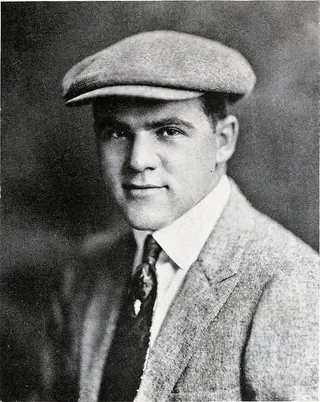
Ray McDonald
Vaudeville with his sister, then Broadway, then MGM. The films did not keep him.
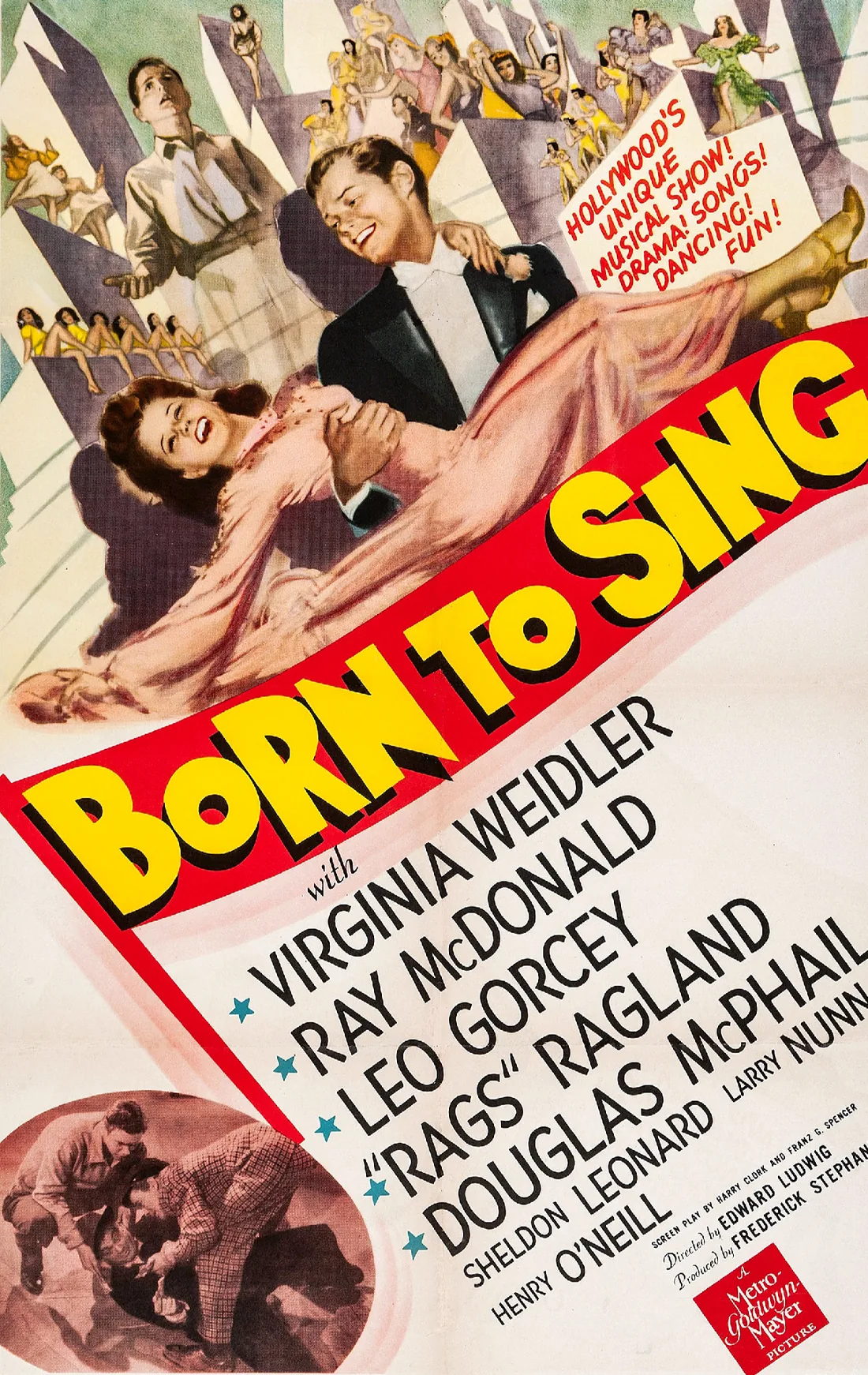
Ray McDonald started in vaudeville as a double act with his older sister Grace, which was an ordinary enough way into the business in the 1930s. What followed was not ordinary: a hit Broadway show, then a contract in Hollywood, then a starring role in Down in San Diego and another in Born to Sing.
He was a tap dancer first and an actor second, and that is visible in the parts he got. Studios of the period had a slot for a young man who could dance, and once musicals thinned out the slot closed.
He worked in leading roles for a few years, then in smaller ones, and died in 1959 at thirty eight.
The photograph filed under this number is a studio publicity still from his MGM period. Stills like it were produced by the hundred for every contract player and sent out to newspapers and exhibitors, which is why so many survive and so little is known about who took them.
The film work that survives him is mostly at MGM and mostly in support. Babes on Broadway in 1941 put him behind Mickey Rooney and Judy Garland. Presenting Lily Mars in 1943 and Till the Clouds Roll By in 1946 gave him numbers rather than parts. Good News in 1947 is the one to watch: he dances Pass That Peace Pipe with Joan McCracken, and the routine shows what the studio had and did not use. After that the credits move to smaller companies. Inside Straight in 1951 and All Ashore in 1953 close the list. Thirteen features in twelve years.
Broadway used him better than the studios did. He was in Babes in Arms in 1937, the Rodgers and Hart show, at seventeen. He came back for Crazy With the Heat in 1941 and Park Avenue in 1946. In between he appeared in Winged Victory, the Moss Hart show of 1943 that put a cast of Army Air Forces servicemen on stage for the war effort. His two marriages were both to performers: Elisabeth Fraser from 1944 to 1952, and the dancer Peggy Ryan from 1953 to 1957. Neither produced a screen partnership.
Facts on this file are checked against the Wikipedia article Ray McDonald (dancer). The wording is ours. Nothing about the photograph is asserted beyond the credit the file itself carries, and that credit is usually a studio rather than a person: stills departments were staff jobs and the photographer's name went unrecorded. Confident attributions in the trade are mostly inherited guesses.
About Ray McDonald
How did Ray McDonald die
He died on February 20, 1959, in a New York hotel room, and the recorded cause was choking on food. He was thirty eight. The death got little coverage. By then he had been out of pictures for six years, his last credit being All Ashore in 1953, and had been divorced from Peggy Ryan for two. There is nothing in the record to suggest anything other than an accident, whatever later summaries imply.
Was Ray McDonald related to Grace McDonald
Grace McDonald was his older sister by two years, and the two of them worked as a dance team in vaudeville before either had a screen credit. Hollywood took them and split them: Grace went under contract to Universal, Ray to MGM, and they did not appear together on film. She had the longer run in musicals, and she is the one whose name usually comes up first in reference books. He is filed here on his own.
What movies was Ray McDonald in
Thirteen features between 1941 and 1953. The MGM years cover Life Begins for Andy Hardy, Down in San Diego and Babes on Broadway, all 1941, Born to Sing in 1942, Presenting Lily Mars in 1943, Till the Clouds Roll By in 1946 and Good News in 1947. Whiplash followed at Warner Bros. in 1948, then Shamrock Hill, Flame of Youth and There's a Girl in My Heart in 1949, Inside Straight in 1951 and All Ashore in 1953. The dance numbers are the reason to look.
Filed alongside