Theda Bara
The Vamp. A publicity department invented her, and then most of her films burned.
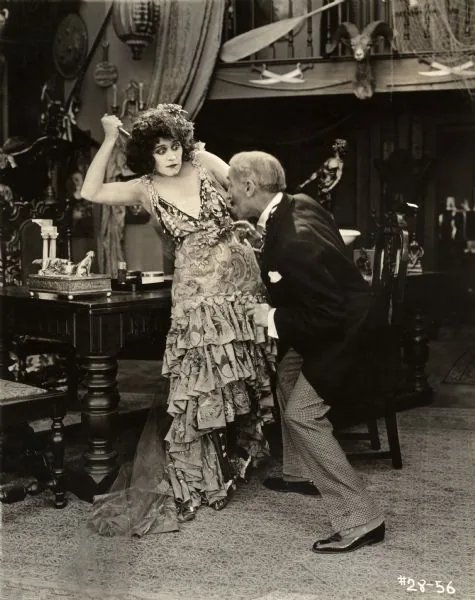
Theodosia Burr Goodman, presented to the public as Theda Bara, was one of the most popular actresses of the silent era and one of the earliest screen sex symbols. Her femme fatale parts earned her the nickname the Vamp.
Her biography as the public received it was written by a studio publicity department, which invented an exotic origin for a woman from Ohio. It is one of the first fully manufactured star identities in the industry.
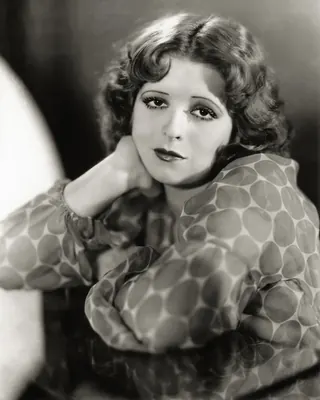
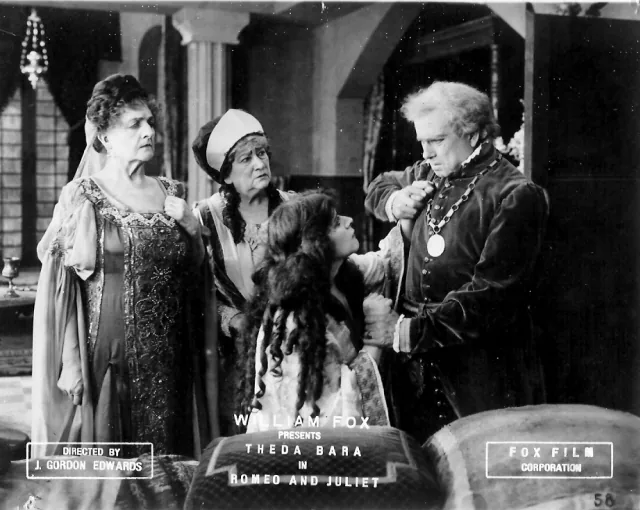
Almost all of her films are lost. Nitrate fires and simple neglect took them, which means the photographs are effectively the whole surviving record of her work.
The invention was carried out in public. In 1915 Fox staged a press reception in a Chicago hotel with the drapes drawn and incense burning, and presented a woman born in the Sahara, the daughter of an Arab sheik and a French mother; the reporters were told the name was an anagram of Arab Death. Theodosia Goodman had spent two years at the University of Cincinnati. The pay rose to $4,000 a week, and in four years, 1915 to 1919, she made roughly forty films for Fox, a rate close to one a month. Nobody at that speed was acting in any modern sense. She was being photographed.
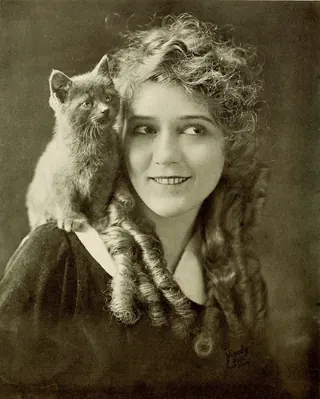
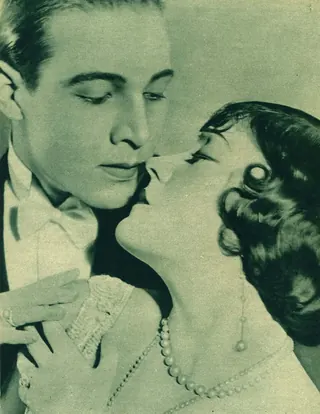
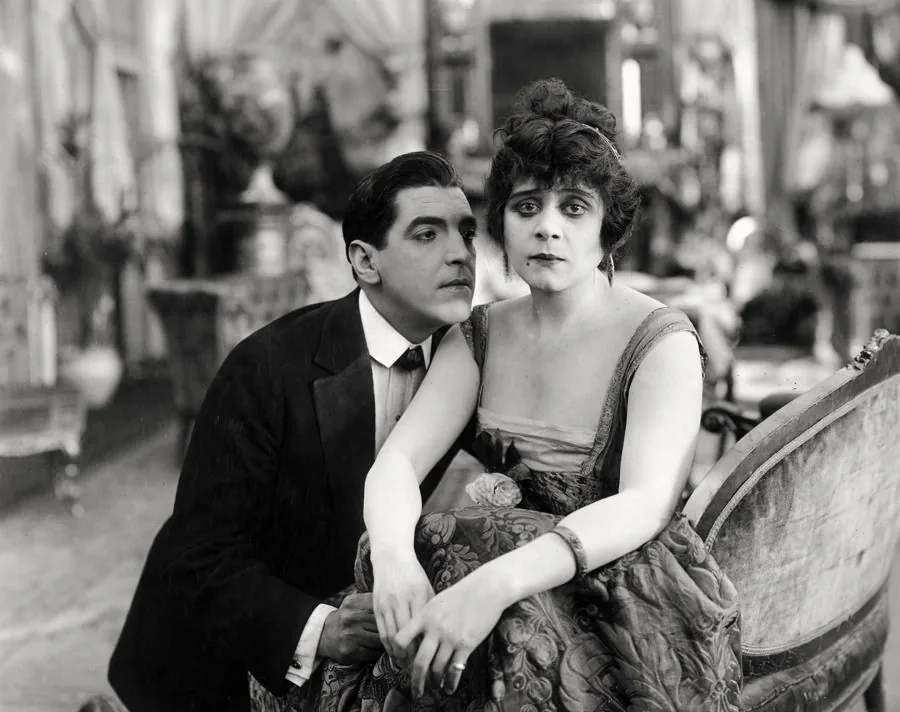
The surviving record is six complete films and five fragments out of 43. A Fool There Was from 1915 and East Lynne from 1916 are among them. Most of the Fox output burned at Little Ferry, New Jersey, on July 9, 1937, when nitrate stock in a storage vault ignited in a heat wave and took more than three quarters of the company's pre-1930 features with it. Cleopatra, the 1917 production that was her biggest, survives as about a minute of footage and a set of costume photographs. Those photographs are why she is still recognisable at all.
Facts on this file are checked against the Wikipedia article Theda Bara. The wording is ours. Nothing about the photograph is asserted beyond the credit the file itself carries, and that credit is usually a studio rather than a person: stills departments were staff jobs and the photographer's name went unrecorded. Confident attributions in the trade are mostly inherited guesses.
Other prints under this name
About Theda Bara
How did Theda Bara die
Stomach cancer, on April 7, 1955, at California Lutheran Hospital in Los Angeles; she was sixty nine. She had been out of films since 1926 and lived quietly in Beverly Hills with her husband, the director Charles Brabin, whom she had married in 1921. She was buried at Forest Lawn in Glendale. A Hollywood Walk of Fame star followed in 1960 and a postage stamp, drawn by Al Hirschfeld, in 1994.
Was Theda Bara really from Egypt
Cincinnati, Ohio, born July 29, 1885, as Theodosia Burr Goodman, the daughter of a tailor. She had never been to Egypt when the Fox publicity department announced in 1915 that she was born in the Sahara, and she had spent only months in France. The stage name was sold to reporters as an anagram of Arab Death; it is more plausibly a shortening of Theodosia and a family surname, Baranger. She played along in public for a few years, then dropped it.
Why are Theda Bara's movies lost
Most of them were in one building. Fox kept its older negatives and prints in a storage facility at Little Ferry, New Jersey, and on July 9, 1937, during a week when temperatures reached 100 degrees Fahrenheit, the nitrate stock ignited on its own. Around 40,000 reels burned. One boy died. More than three quarters of the company's features from before 1930 went with it, including nearly all of Bara's Fox work. Only six of her 43 films survive complete.
Filed alongside