Rudolph Valentino
The Latin Lover. Dead at thirty one, and the funeral made news for days.
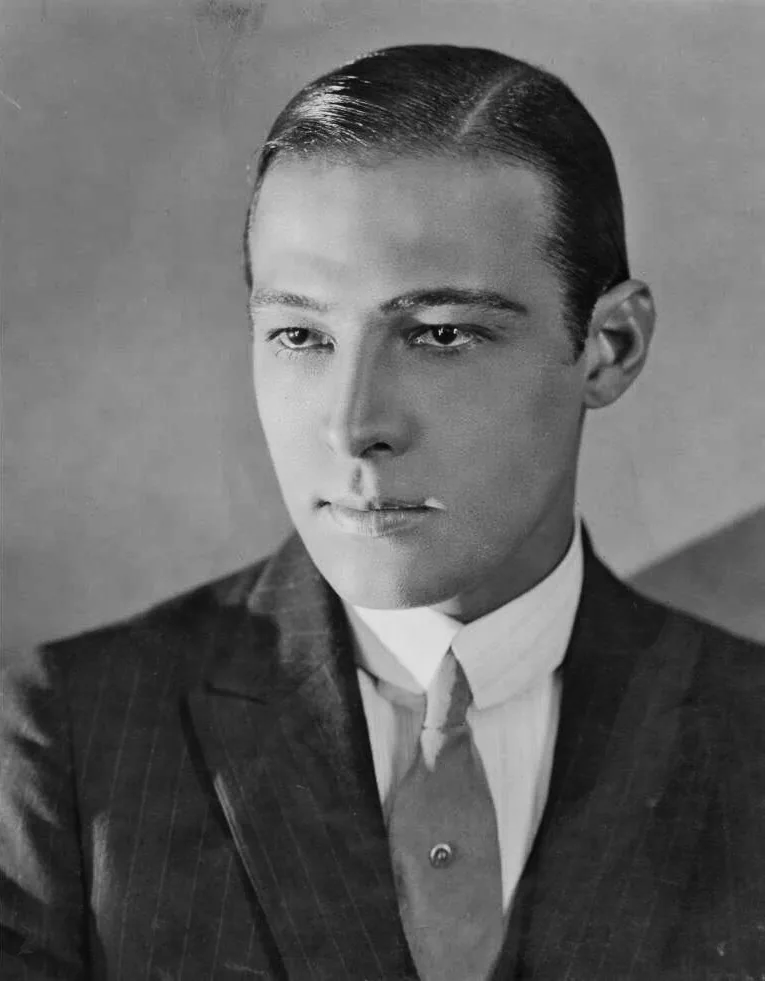
Rodolfo Guglielmi, working as Rudolph Valentino, was an Italian born actor and dancer who became one of the defining stars of American silent cinema. The press gave him the Latin Lover label and he was never able to put it down.
He died in 1926 at thirty one. The public reaction was on a scale the industry had not seen before and helped establish the modern shape of celebrity mourning.
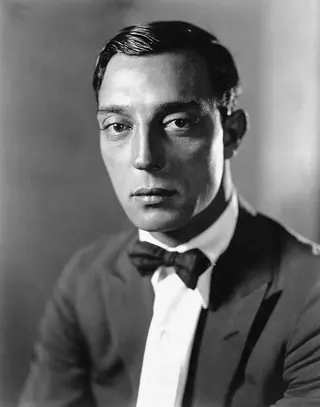
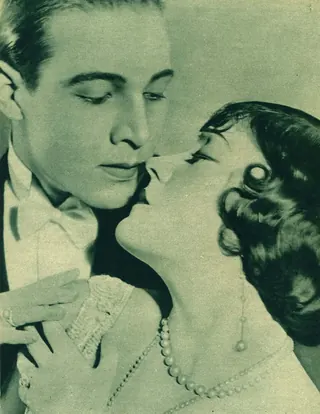
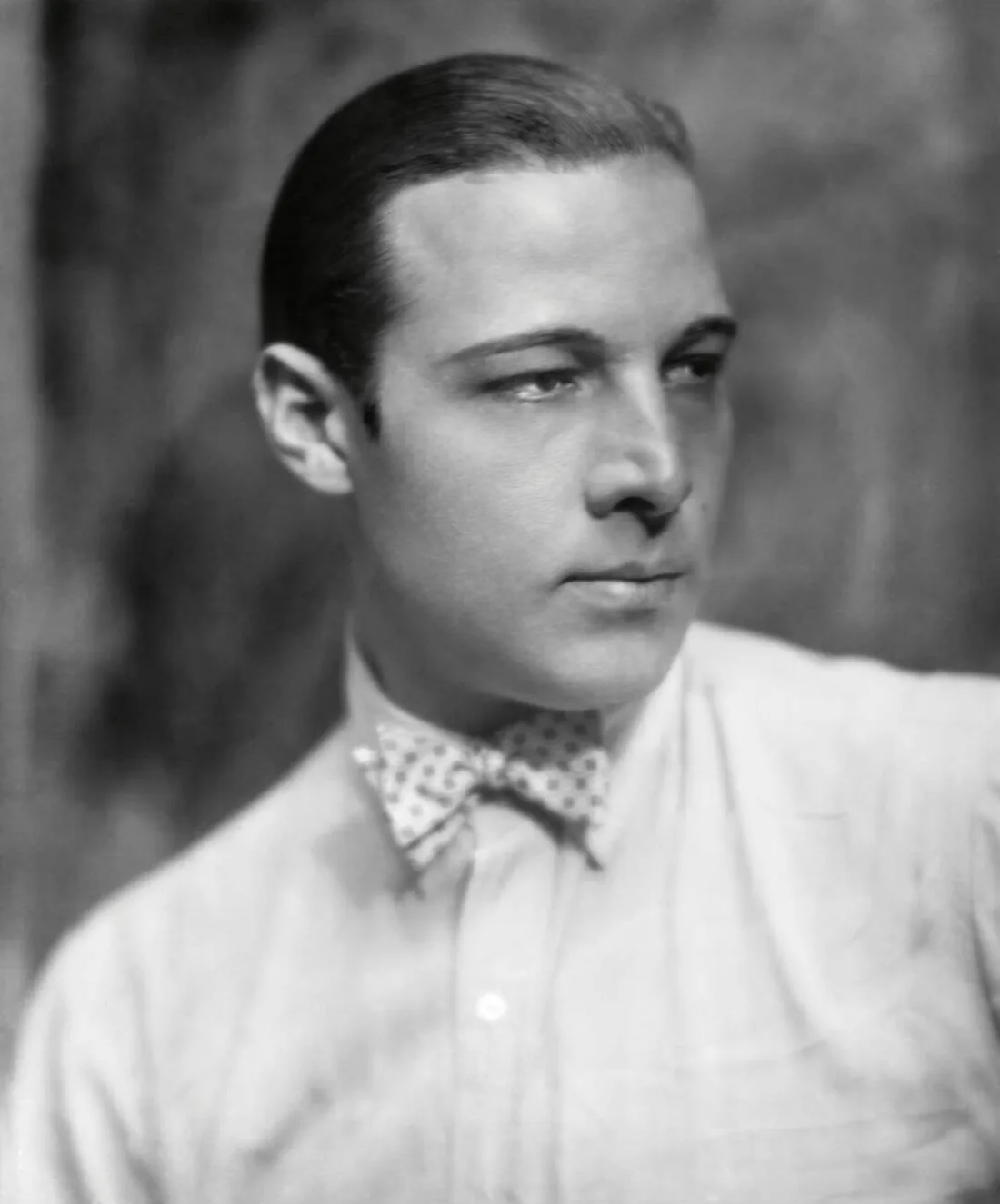
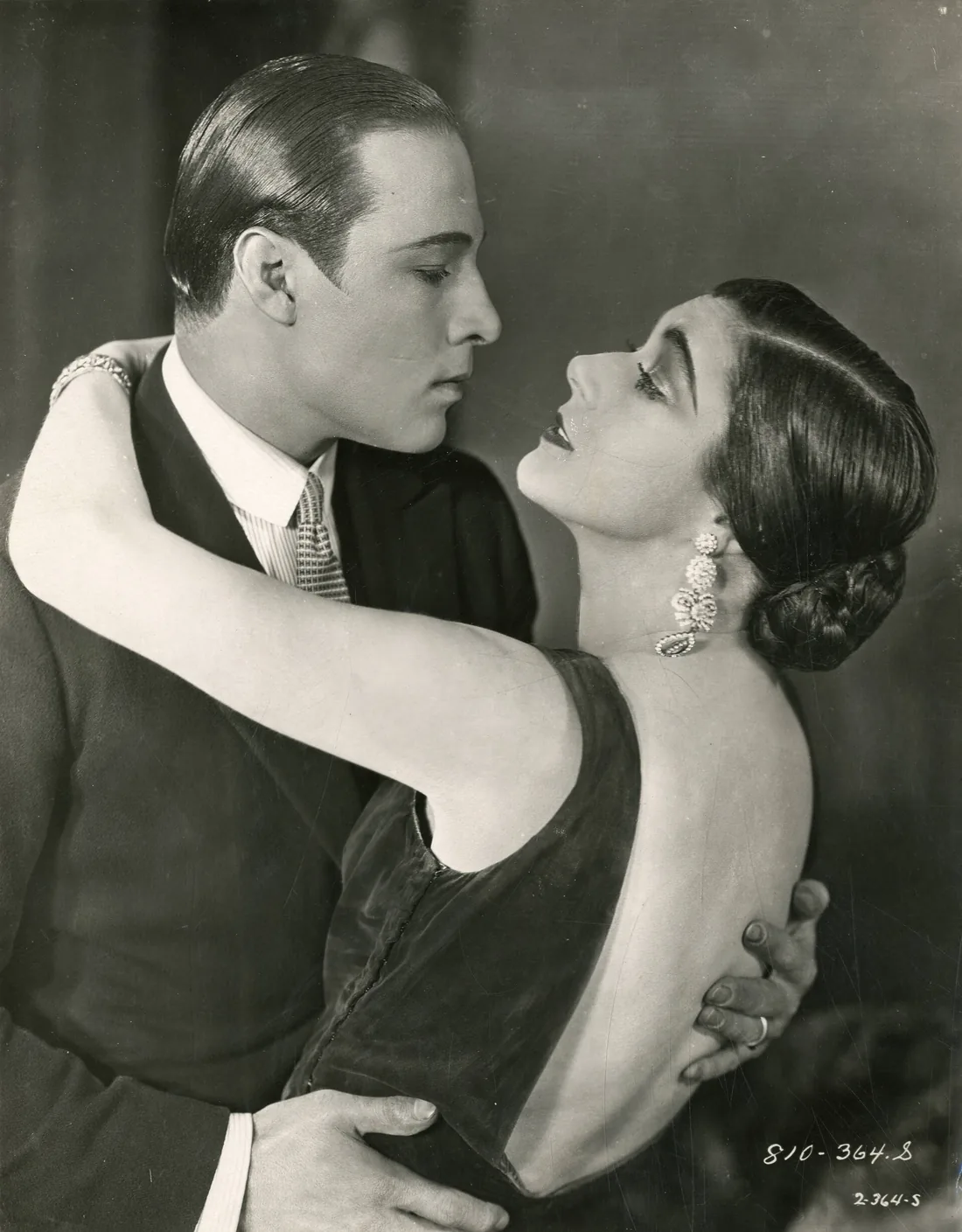
Publicity photographs of Valentino were produced in extraordinary numbers during his lifetime and reprinted for decades after it, so provenance on any particular print is usually impossible to establish.
He came into the United States on December 23, 1913, aged eighteen, and spent his first years in New York as a taxi dancer at Maxim's, paid to partner women who arrived without one. Film work came slowly and villains came first. The Four Horsemen of the Apocalypse in 1921, with the tango, changed the billing, and The Sheik the same year fixed the type. He then did something almost no contract player did: in September 1922 he refused to work for Famous Players-Lasky over the quality of the material, a one-man strike that kept him off the screen for the best part of two years.
The photographic record is heavy on studio portraiture and light on candid material, and the best of it is signed. Donald Biddle Keyes photographed him in 1922, the year of Blood and Sand. Henry Waxman made the portrait sold as the last photograph in 1926. The Cobra still from 1925 in this file shows a working actor in a picture that did not do well. What the portraits do not show is the fight: in July 1926 the Chicago Tribune ran an editorial calling him a pink powder puff, and he challenged the anonymous writer to a boxing match. A sportswriter took it on instead and lost.
Facts on this file are checked against the Wikipedia article Rudolph Valentino. The wording is ours. Nothing about the photograph is asserted beyond the credit the file itself carries, and that credit is usually a studio rather than a person: stills departments were staff jobs and the photographer's name went unrecorded. Confident attributions in the trade are mostly inherited guesses.
Other prints under this name
About Rudolph Valentino
What did Rudolph Valentino die of
Peritonitis. He collapsed at the Hotel Ambassador in New York on August 15, 1926, and was operated on at the Polyclinic Hospital for a perforated gastric ulcer and appendicitis. The infection spread and he died eight days later, on August 23, aged thirty one. A perforated ulcer presenting as appendicitis has since been referred to in medical writing as Valentino's syndrome. Rumours of poisoning circulated at the time and had nothing behind them; the medical record is straightforward.
What happened at Rudolph Valentino's funeral
The crowd outside Frank Campbell's Funeral Church on Broadway was put at around 100,000 on August 24, 1926, and the police lost control of it; windows were broken. Pola Negri, who said she had been engaged to him, collapsed over the coffin in front of photographers. A supposed Fascist honour guard sent by Mussolini has been widely reported as a stunt arranged by the funeral home. A second service was held in Beverly Hills, and he was placed in a crypt lent by June Mathis at Hollywood Memorial Park.
Who was the Lady in Black at Valentino's grave
A veiled woman in black began leaving roses at the crypt on the anniversary of his death, and the papers ran the story every August from the late 1920s. The first to be identified was Ditra Flame, who said Valentino had visited her in hospital as a sick girl and asked her to remember him; she kept the vigil into the 1950s and then stopped as imitators multiplied. The observance continues at Hollywood Forever, where a memorial is held each August 23.
Filed alongside