Charlie Chaplin
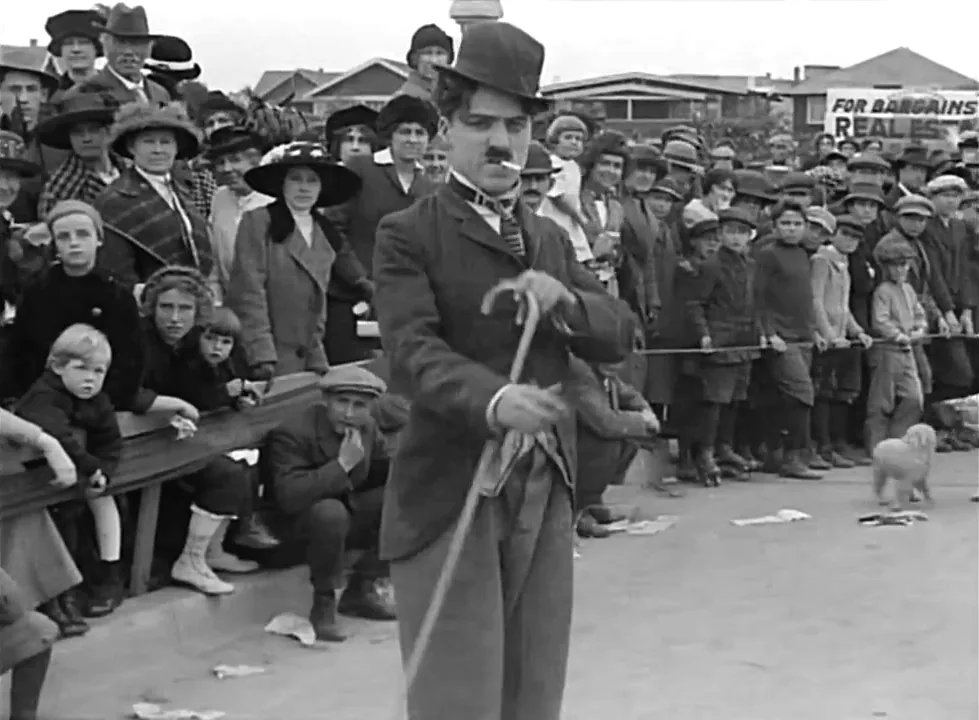
The Tramp. The most reproduced face of the silent era, and the most photographed.
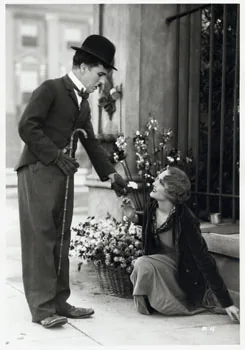
Charles Spencer Chaplin came out of English music hall and rose to fame in the era of silent film, becoming a worldwide figure through a single screen persona: the Tramp, with the bowler, the cane and the walk.
Performing was the smallest part of it. He directed, edited and later composed the scores for his own films, which put him in a position almost nobody else in the industry occupied and made him extremely difficult for a studio to manage.
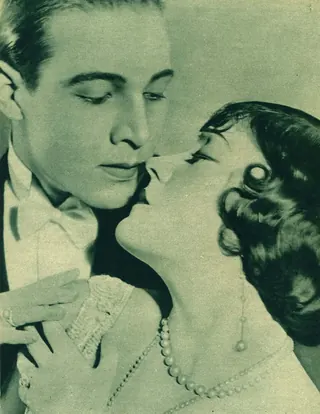
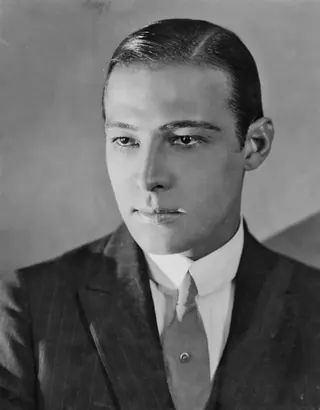
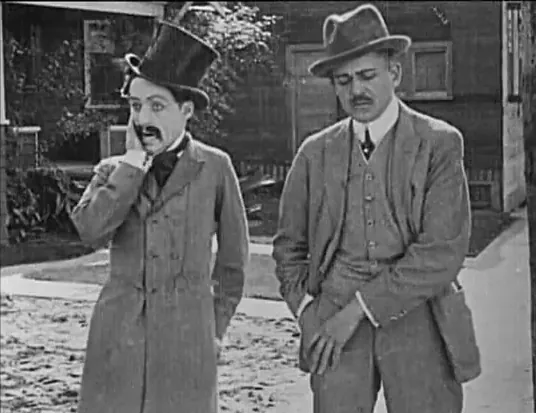
For an archive, Chaplin is the easy case and the hard case at once. Photographs of him exist in enormous numbers, which makes any single still less remarkable, and the costume is so recognisable that people rarely look at the face underneath it.
He worked slowly and expensively, and the surviving outtakes show why. Chaplin did not write scripts in the usual sense. He built a set, put himself in front of the camera and shot variations until something held, and the ratio of film exposed to film used ran far beyond anything a studio-contracted comedian could have afforded. At Mutual, on a contract worth $670,000 a year, he made twelve two-reelers in eighteen months, which was slow for the period. He owned his negatives from 1918 on. The outtakes were found decades later and cut into the documentary Unknown Chaplin in 1983.
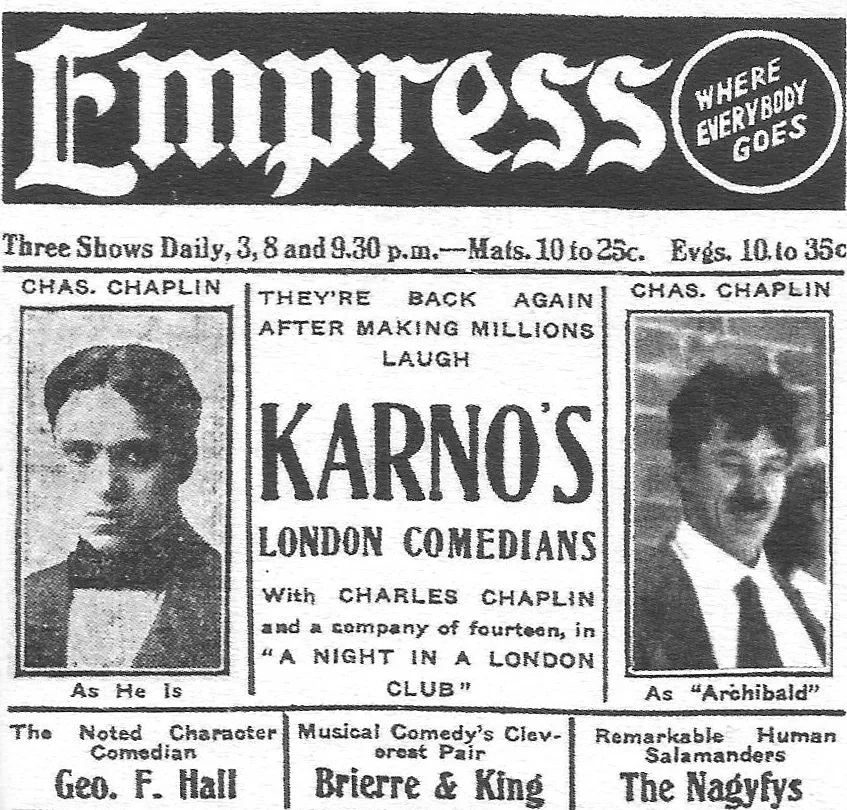
The photographic record of Chaplin is thick at every stage, which is unusual. The Keystone year of 1914 produced roughly thirty five films and a great many stills, because Mack Sennett's company sold on faces. Essanay and Mutual added studio portraiture. The Tramp also circulated in forms that were not photographs at all: strip cartoons, dolls, sheet music covers, and theatre advertising like the Empress Theatre card for the Karno company in 1913 that this file also holds. The result is that the costume is more familiar than the man, and portraits of Chaplin out of costume from the 1920s often go unrecognised.
Facts on this file are checked against the Wikipedia article Charlie Chaplin. The wording is ours. Nothing about the photograph is asserted beyond the credit the file itself carries, and that credit is usually a studio rather than a person: stills departments were staff jobs and the photographer's name went unrecorded. Confident attributions in the trade are mostly inherited guesses.
Other prints under this name
About Charlie Chaplin
Why did Charlie Chaplin leave America
He did not leave so much as get shut out. In September 1952 Chaplin sailed for London on the Queen Elizabeth for the premiere of Limelight. While he was at sea, Attorney General James P. McGranery revoked his re-entry permit and said he would have to answer questions on his politics and morals before being readmitted. Chaplin, a British subject who had never taken United States citizenship, chose not to contest it. He settled at the Manoir de Ban in Corsier-sur-Vevey, Switzerland, and did not return until April 1972.
How did Charlie Chaplin die
He died in his sleep at home in Corsier-sur-Vevey on 25 December 1977, aged eighty eight, after a stroke; the last years had left him frail. He was buried in the village cemetery. In March 1978 two men dug up the coffin and demanded money from the family. It was recovered in May and reburied in a concrete vault. The men, a Pole and a Bulgarian, were caught and tried. The episode is often told as farce. The family did not find it one.
How many times was Charlie Chaplin married
Four times. Mildred Harris in 1918, Lita Grey in 1924, Paulette Goddard in 1936, and Oona O'Neill in June 1943. Harris and Grey were both in their teens at the wedding and both marriages ended in divorces the press covered in detail. Goddard's status was unclear for years because the wedding, in China, was not announced. Oona O'Neill, daughter of the playwright Eugene O'Neill, was eighteen; Chaplin was fifty four. That marriage lasted until his death and produced eight children.
Filed alongside